How To Prevent & Remove Mould On Curtains
You pull back your curtains on a sunny morning and catch a whiff of something musty. A closer look reveals dark, speckled patches creeping along the hem or gathering in the folds. It's an unpleasant discovery — but it's also an incredibly common one, especially in homes along the Mid North Coast where warm temperatures and coastal moisture create ideal conditions for mould to thrive. The good news is that mould on curtains is manageable if you know what you're dealing with and act before it gets out of hand.
Why Mould Loves Your Curtains
Curtains sit in one of the most moisture-prone spots in any home: right up against the window. Condensation forms on glass when warm indoor air meets a cooler surface and that moisture doesn't just drip down the pane — it migrates into the fabric hanging beside it.
Add in poor ventilation, infrequent washing curtains and the natural humidity that comes with coastal living and you've got a setup where mould spores can settle in and spread with very little encouragement. Fabric type plays a big role too. Dense, heavy materials like velvet or thick polyester blends trap moisture more readily than lighter weaves, making them more susceptible when airflow is limited.
Rooms with little cross-ventilation (think enclosed bedrooms or bathrooms) are particularly at risk. Mould on curtains in these spaces can take hold within days during a humid spell.
Spotting the Early Warning Signs
Mould rarely announces itself loudly at first. Early signs are easy to dismiss as general grime or dust, which is exactly why it spreads before most people take action. Knowing what to look for makes a real difference.
Watch out for:
- Dark spots or smudging along the lower hem or where the curtain touches the windowsill
- A persistent musty smell that doesn't go away even after airing out the room
- Discolouration in the folds where fabric bunches together & airflow is minimal
- A faint powdery texture on the surface of the fabric, particularly on synthetic materials
If you catch it early, your chances of a full recovery for the curtain are much higher — and knowing how to clean mould off curtains at the first sign of trouble is far easier than tackling a deep-set stain.
How to Clean Mould Off Curtains Safely
Before reaching for any product, it's worth understanding that not all fabrics respond the same way to mould treatments. Knowing the best cleaning methods for different curtain fabrics before you start can save you from accidentally damaging the material in your effort to salvage it.
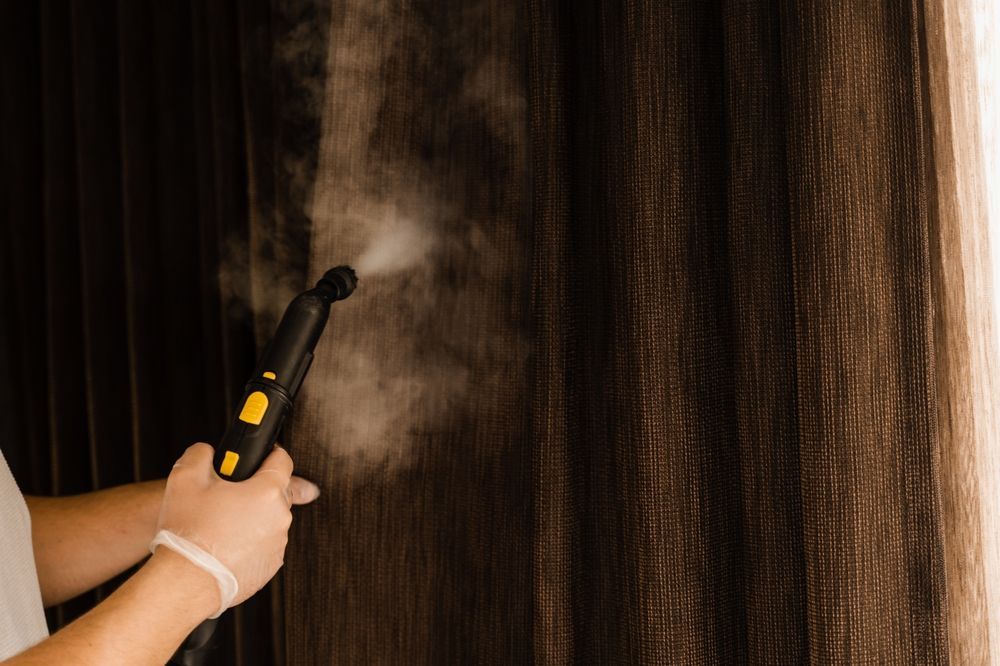
For most washable fabrics, the general process for how to clean mould off curtains goes like this:
- Take the curtains outside first to brush off any loose spores without spreading them through your home
- Pre-treat the affected area with a solution of white vinegar & water (equal parts), or a diluted tea tree oil mix, letting it sit for at least 20 minutes before rinsing
- Wash according to the care label — most cotton and polyester curtains handle a warm machine wash well, while sheers& delicates need a gentle cold cycle or hand wash
- Dry in direct sunlight where possible, as UV exposure helps kill residual spores
Avoid using bleach on coloured or patterned fabrics as it can strip dye and weaken fibres over time. When in doubt about how to clean mould off curtains made from delicate or lined materials, checking with a specialist is always a safer option than guessing.
How to Wash Curtains Without Causing Damage
One of the most practical things you can do to stop mould taking hold is simply knowing how to wash curtains properly and doing it regularly. Washing curtains sounds straightforward, but a few missteps can lead to shrinkage, distortion or colour loss. Knowing how to wash curtains the right way keeps them looking good wash after wash, while giving any mould treatment you've applied the best chance of working.
A few things to keep in mind:
- Always check the care label before anything else — some lined or interlined curtains are dry-clean only
- Remove all hooks, rings & weights before washing curtains to prevent snagging
- Wash curtains separately from other laundry to avoid colour transfer or mechanical damage from heavier items
- Use a mild detergent & avoid fabric softener on sheer or synthetic fabrics, as it can leave residue that attracts dust
Hang them back up while still slightly damp to let them naturally fall back into shape as they dry. Making washing curtains part of a regular seasonal routine — rather than a reactive response to visible mould — is one of the simplest ways to stay ahead of the problem.
How to Prevent Mould on Curtains With Natural & Chemical Inhibitors
Once you've dealt with an active outbreak, prevention becomes the priority. Understanding how to prevent mould on curtains long-term means looking at both what you apply to the fabric and how you manage your home environment day to day.
Natural options work well as a maintenance measure:
- White vinegar spray applied lightly after washing & left to dry is a simple preventative that discourages spore growth
- Tea tree oil diluted in water has antifungal properties & a less intrusive smell than vinegar over time
- Baking soda sprinkled on fabric before vacuuming can absorb lingering moisture & odour
For more persistent or recurring mould, a commercial anti-mould fabric spray (look for products specifically labelled safe for textiles) may be more effective. Knowing how to prevent mould on curtains in a high-humidity environment often comes down to layering these habits — ventilation, knowing how to wash curtains regularly and occasional treatment together are far more effective than any one step alone.
Ventilation & Daily Habits That Make a Difference
No single cleaning product will solve a mould problem if the underlying conditions stay the same. Improving airflow throughout your home is the most effective way to prevent mould on curtains from returning season after season.
Some practical habits worth building:
- Open windows in the morning to let moisture-laden air escape, especially in bedrooms where overnight breathing adds humidity
- Pull curtains back from the window during the day rather than leaving them bunched against the glass
- Use exhaust fans in bathrooms & kitchens consistently, not just when things feel steamy
- Consider a dehumidifier in rooms that stay consistently damp, particularly during winter when windows stay shut
These aren't drastic changes, but done consistently they dramatically reduce the conditions mould needs to establish itself.
Choosing Fabric That Fights Back
Some fabrics are simply better suited to humid environments. If you've had repeated problems with mould on curtains, the material itself may be part of the issue rather than just your cleaning routine.
Choosing the right curtain fabric for a humid climate makes mould far less likely to take hold in the first place. Lighter weaves allow better airflow, moisture-resistant treatments are available on many modern fabrics and synthetic blends often handle humidity more gracefully than natural fibres in wetter climates. It's a conversation worth having before your next purchase rather than after the problem reappears.
When Cleaning Isn't Enough
Sometimes mould has been left too long, penetrated too deeply into the fabric or returned too many times to make repeated cleaning worthwhile. At that point, persistent mould is one of the clearest signs your curtains need to be replaced rather than cleaned again.
Holding onto heavily moulded curtains isn't just an aesthetic issue — it can affect indoor air quality, particularly for anyone with respiratory sensitivities. Knowing when to let go is part of maintaining a genuinely healthy home.
Ready for a Fresh Start?
We at Curtain Haven & Blinds understand that living on the Mid North Coast comes with its own unique challenges when it comes to keeping a home fresh. The humidity, the coastal air, the warm winters that never quite let things dry out properly — it all adds up.
Our team specialises in curtains in Port Macquarie and can help you find replacement options suited to coastal humidity, with fabric choices designed for curtains in Port Macquarie's specific climate challenges. We've helped many homeowners across Port Macquarie find curtains that resist moisture and stay looking fresh year-round.
Whether mould has damaged your current curtains beyond saving or you'd simply like advice on more mould-resistant curtains in Port Macquarie homes, we're here to help. Get in touch with us today to book a consultation about curtains for Port Macquarie climates and find out why so many Port Macquarie residents trust us with their curtains.